Monday, June 9, 2014

2014 Sydney Film Festival Review: Locke

Locke Movie Poster

Director: Steven Knight
Writer: Steven Knight
Stars (or should that be 'Star'?): Tom Hardy 

I have always been mesmerised by films shot in real time. Hitchcock’s Rope is one of the most suspenseful films I have ever seen, and it’s that real time unravelling that helps it achieve that status. The frenetic Run Lola Run moves at a pace that forbids boredom from settling in. Richard Linklater’s Before trilogy proves you can create magic with little resources except two characters and a script brimming with truth. My obsession with films shot in real time overlaps with my fascination for films featuring a handful of characters, or films that take place in one location. Steven Knight’s Locke, which screened as part of the Official Competition at the 2014 Sydney Film Festival, is a film I should like. It is shot in real time, almost entirely in a car. We only see the face of one character. Unfortunately, these elements do not mask the film’s hesitation to—pardon the pun—put its foot on the accelerator.

Tom Hardy stars as Ivan Locke, a successful construction manager who is happily married with children. On the night before one of the biggest professional challenges of his life, Locke receives a phone call that compels him to drive from Birmingham to London. I will not reveal who the caller is, but this conversation triggers a chain reaction of events that would induce road rage in the most cautious of drivers. Locke’s only companions are the voices that come through his speakerphone. These are the only plot details I will divulge. But, let’s face it, it’s not as though I am omitting a great deal.


Locke is not a bad film. I would say it is good, but it certainly will not be lingering in my mind when the Festival finishes up. I feel as though it suffers from a case of identity crisis, and, no...I don’t just say that because of Tom Hardy’s forced Welsh accent. Is the film a drama? In one sense: yes. There are dramatic revelations. But I didn’t really feel the drama. It didn’t hit me on a gut level. Others have described it as a thriller. I was actually expecting a thriller going into the film, along the lines of Buried (2010) or Duel (1971). I soon realised this film was not intent on sending a chill down my spine. So, if Locke is not explicitly a drama or a thriller, then what is it? I think of it as an experiment, first and foremost. This is an example of cinema as personal challenge. Knight wrote the script in ten days, and shooting took place over a mere eight days. His execution illustrates that he wanted to make a truly unique film. However, I feel that he got carried away with pushing the creative boundaries and forgot to polish the narrative. Other than some vague comment on the consequences of neglectful parenting, I cannot work out what he is trying to say with this film. Form seems divorced from meaning. I am struggling to deduce any significance from the stylistic choice to shoot the entire film (save for a brief opening scene) inside a car. The confined, vehicular setting feels like a gimmick because it does not complement the story. If it turns out the car is a metaphor for Locke taking control of his life, then I am really disappointed.

The ambiguous ending may be a hit with some viewers, but I feel it detracts from everything that went before. The loose ends are too glaring for our imaginations to engulf. It would be effective if we could put faces to the voices Locke was conversing with, but that doesn’t happen, so it feels as though our everyman protagonist is returning to the London hotel room where the film’s voice actors congregated to perform their lines over the phone. It does not feel like he is driving towards another character.

So far, I have detailed the film’s weaknesses, but the film is not without merit. Yes, there are a few flat spots in the narrative that are especially concerning in an 85-minute film where every moment should be essential. But, for the most part, the screenplay is tight. Knight made me care for the characters—even the faceless ones—without embroiling them in grand set pieces. He has enough faith in his dialogue to avoid convoluted and unnecessary inciting incidents. However, I won’t lie that part of me was hoping for things to play out like Scorsese’s After Hours. Producer Guy Heeley confirmed that all the phone calls in the film were genuine conversations. Nothing was pre-recorded. It’s a small detail like this that separates the good filmmakers from the bad ones. Also deserving of praise is the cinematography by Haris Zambarloukos. The reflection and refraction of vibrant lights helps to break the monotony of one man driving his car for almost an hour-and-a-half. Through his camerawork, Zambarloukos hoped to simulate the aesthetics of a spaceship. Maybe that explains why the film’s intention is still so alien to me.

3/5 stars.

Sunday, June 8, 2014

2014 Sydney Film Festival Review: Boyhood


Director: Richard Linklater
Writer: Richard Linklater
Stars: Ellar Coltrane, Patricia Arquette, Ethan Hawke

Right before my screening of Boyhood at the Sydney Film Festival, Ellar Coltrane and Cathleen Sutherland walked out on stage to briefly introduce the film to the packed State Theatre audience. Sutherland is one of the film’s four producers. The 19-year-old Coltrane is the heart and soul of Boyhood. Coltrane spoke into the microphone and he sounded 19. I didn’t have the greatest seat, but he looked about 19, too. Coltrane and Sutherland disappeared behind the curtain and the film started rolling. Within the film’s first minute, we see a seven-year-old boy sprawled out on his front lawn, gazing at the sky (essentially what you see on the film’s poster). When my mind registered that the boy was Ellar Coltrane—the same 19-year-old I saw in the flesh just moments before—a lump formed in my throat and I realised I was in for something special. The process of human ageing had already been laid bare before my eyes and we were just getting started.

Boyhood is a film that will be talked about for decades. Beginning in 2002, director Richard Linklater filmed the same cast of actors (and, by extension, characters) over a period of 12 years. Logistically and emotionally, that’s a gargantuan undertaking. We meet Mason (Coltrane) as a seven-year-old living with his single mother, Olivia (Patricia Arquette), and older sister, Samantha (Lorelei Linklater). Mason maintains an amicable though stilted relationship with his father, Mason Sr. (Ethan Hawke). We follow Mason from childhood through to adolescence, concluding with his initiation into young adulthood. The film succeeds with its organic narrative. We see a young Mason practising his golf swing with his stepfather—not because golf is an integral component of the film (it isn’t), but because kids often practise things. On that particular day, it happened to be golf. There are no distracting announcements that one year has ended and another one has begun. No gimmicky title cards to be found here, folks. Boyhood was shot entirely on 35mm film to prevent noticeable discrepancies in the quality of digital footage, and to maintain tonal integrity with cinematography. But the film needs to mark time somehow, right? Looking at Mason’s hairstyle is a good place to start. Inevitably, you do notice the physical maturation of all cast members, but the camera does not linger on their faces with close scrutiny to reveal the ravages of age. Just as we do not look in the mirror each day and notice the formation of frown lines, the ageing process in the film manages to be seamless.


Time is also marked with popular music. With a diverse soundtrack ranging from Coldplay’s Yellow, to Soulja Boy’s Crank That, to Gotye’s Somebody That I Used to Know, Linklater understands the emotional power of song—the way a single chord change can conjure up memories that would otherwise remain repressed. We also see objects that exist today as anachronisms, such as an iMac G3 and a 20Q. I was initially disappointed when the camera zoomed in on these items, as I wasn’t expecting such a degree of self-awareness. However, as more of these technological artefacts came into view, my disappointment turned into sweet nostalgia.

With a title of Boyhood, I can understand why some viewers may expect the film to explore its themes through a narrow scope. As the film progresses, however, you realise it is not about growing up as a male. It is about having to grow up, period. Linklater revisits his obsession with time and impermanence that underpinned the incredibly moving Before trilogy. There is a quote from Before Midnight: “Like sunlight...sunset, we appear...we disappear. We are so important to some, but we are just passing through.” While Boyhood does not place as much emphasis on our inevitable demise, it does remind us that time is indifferent to our struggles—that we belong to something bigger than us.

I was intrigued by the audience’s reaction to individual scenes during my screening. On several occasions, people were laughing during scenes which I considered moving. This is a sign of the film’s rich emotional depth. It is important to remember that neither reaction is correct, as the film allows engagement on a deeply personal level. To tell someone they can’t laugh is to invalidate their individual history.

Boyhood is imbued with the rare quality of simultaneously being like every film you’ve ever seen, and being like no film you’ve seen before. The familiarity arises from the simple scenes of domesticity among Mason’s family. We are also confronted with standard coming-of-age fare, such as experimentation with drugs and alcohol and forays into sexual intimacy. Boyhood separates itself from the pack of generic American suburban dramas by not asking for our empathy, but demanding it. I often lament how the blockbusters and epics of Hollywood have been monopolised by the sci-fi, fantasy, and action genres. Regular readers of this blog would know I adore the drama genre, but I know a large proportion of the film-going public does not. If more dramas had the emotional gravitas of Boyhood, I think the genre would be back in vogue. Of course, the film partly achieves its “epic” quality through its 165-minute runtime. While others have complained that this is too long, I was never bored and wouldn’t have cared if it went on longer.   


When the film was over and I walked out of the cinema, I felt like hugging everyone I know. I wanted to call up a friend I hadn’t seen in months and ask to catch up over coffee. I wanted to approach a random pretty girl on the street and ask her out on a date because we will both be dead someday and that one act of courage could be the start of something special. I just felt so alive, goddamnit!

In the final scene of Boyhood, a character has an epiphany that people do not seize moments. It’s the other way around. The moments seize us. It reminded me of how difficult it is to define the present. If I say, “This is the present,” the sentence is immediately relegated to the past once I stop talking. The last time a film or television show made me so acutely conscious of my mortality is when I watched the finale of Six Feet Under and Nate Fisher uttered a sentence that has haunted me every day since: “You can’t take a picture of this. It’s already gone."

I just want everyone to see this film. It’s the type of film that can change a life. As someone who saw it at the age of 21, I’m fairly certain it will change mine. Hopefully, you will not remark—like a despondent Olivia realising her life consists of a series of milestones—“I just thought there would be more.”  

5/5 stars.

Sunday, June 1, 2014

May 2014 Film Wrap-Up

MAY 5
Carrie (Kimberly Peirce, 2013) = 1/5

Terrible. The antithesis of subtlety. In the 1976 adaptation, there was an undercurrent of sadness throughout the entire film. We ached for Carrie White and thought all of her bullies were complete dicks. In this film, mood and atmosphere are totally discarded. When bad things happen to Carrie, we think "How unfortunate!", not "How sad!". I wasn't cheering on the good characters and I wasn't despising the bad characters. And when you can't emotionally invest in a film, you sure as hell won't enjoy it.

De Palma's adaptation was a film driven by emotion. Peirce's remake feels superficial and dumbed-down. It is made with the premise that a film featuring many teenage characters must be pitched to teenagers, and fails to appreciate that the emotions of those teenagers are present in people younger and older, too.

MAY 6
Do the Right Thing (Spike Lee, 1989) = 4/5

This was my second viewing of Do the Right Thing—an important, emotionally-charged film that would not be made today. It's fiercely original with memorable characters, and I love how Lee never divulges what the "right thing" is.

MAY 8
Crash (David Cronenberg, 1996) = 2.5/5

A film of daring originality that is unfortunately too cold to penetrate (no pun intended). For the uninitiated, the film is about a deviant subculture of people who channel the energy of car accidents to reinvigorate their sex lives. It just didn't offer a shred of empathy. And perhaps that was the intention as some statement on sexual objectification, but I am allowed to be opposed to that intention.

P.S. I will never look at an automobile in the same way again.

MAY 10
Another Year (Mike Leigh, 2010) = 3.5/5

For a film that covers an entire year, I expected it to encompass a broader emotional spectrum. Now, I am only 21, so I obviously lack a lot of life experience that informs Leigh's screenplay and, by extension, his characters' lives. That said, I followed these characters from spring through to winter and learned nothing about myself. I feel too much emphasis was given to the Lesley Manville character. It was just really difficult to empathise with her.

This is an actors' and writers' film. It is good, but it lacks the emotional gravitas I was expecting based on the poster's sprawling branches. If the leaves of the tree are symbolic of human experience, then the roots do not run too deep.

MAY 11
The Passion of Anna (Ingmar Bergman, 1969) = 3.5/5

Far from my favourite Bergman, but still great. The pace was unbearably slow at times, but with his searingly honest dialogue, Bergman never allows enough time for boredom to set in. A bleak exploration of deceit and cruelty, with excellent performances all round.

MAY 16
Stranger by the Lake (Alain Guiraudie, 2013) = 4/5

I'm ashamed to say that I had to wait until I was completely alone to watch this. If anyone else in my household had walked past the TV during a homoerotic scene, they would make ignorant comments. Thankfully, I have the maturity to watch cinema that caters to sexual orientations other than my own. I feel sorry for people who don't, because they miss out on gems like this.

Carnal desire meets carnal demise in this intensely gripping film. It is deftly directed and I particularly admire Guiraudie's aesthetic choices. Despite taking place in one location, visual monotony never threatens to permeate the film. On a less important note, the poster is fucking beautiful!

MAY 17
This is the End (Evan Goldberg & Seth Rogen, 2013) = 3.5/5 

I'm not entirely sure what I just watched, but I liked it. A delightfully bizarre and outrageously funny film that thrives on spontaneity. It must have been tempting to make this film as a collection of in-jokes with nothing at stake for the viewer, but the film does not venture down that path, and that really impressed me. Oh, and a word of advice: you may want to dust off those Backstreet Boys CDs to get you in the mood for this. 

MAY 18
Stranger Than Paradise (Jim Jarmusch, 1984) = 3/5

A revelation of its era that is unfortunately not as impressive today. I wish the characters were as engaging as the cinematography. Maybe I just expected too much from it.

MAY 19
You're Next (Adam Wingard, 2011) = 3.5/5

It may not be as clever as it thinks it is, but the film is slickly directed and imbued with a wry sense of humour. It was also refreshing to see some jump scares that were genuinely jolting. So much better than two similar films: The Strangers and The Purge.

MAY 20
The Crying Game (Neil Jordan, 1992) = 3.5/5

Jaye Davidson and Stephen Rea give brilliant performances in this bittersweet tale of love and redemption. People can't seem to talk about this film without mentioning its twist. Jordan knows better than to use the twist as a cheap payoff, instead couching it in the middle of the film to magnify everything that has gone before, and make the remainder of the film more interesting.

I guess the thing that stopped me from truly loving this film was the lack of an emotional centre. I couldn't squarely identify with anyone as the film teetered awkwardly between political thriller and love story. After such an engaging first act, Jordan attempts to tackle too many plot lines and the film suffers as a result.

MAY 22
Kicking and Screaming (Noah Baumbach, 1995) = 4.5/5

This sorely underrated film is so delightfully quotable. I think the key to its success is that it explores the hipster mentality but was made at a time when the word 'hipster' had not permeated mainstream culture. Thus, it doesn't fall into the trap of being self-aware.

Its depiction of life after college is deadly accurate, and these characters' hopes and fears become our own as the film progresses. For a film about pseudo-intellectuals, the film is not lacking in heart. Baumbach understands the disconnect that arises from being well-versed in Keats yet clueless about the trajectory of your own professional life...of referencing theorists but not extending your own theories. All of these characters display a charming, relatable naivety, and it proves a challenge to not fall in love with them.

Oh, and just for the record, the closing lines of this film are some of the most beautiful words you will ever hear.

MAY 30
Under the Skin (Jonathan Glazer, 2013) = 4.5/5

On the way to see this, I joked with my friends that 90% of the audience for this film would be horny teenage boys who can't afford Mr Skin subscriptions. First of all, that wasn't the case. Secondly, if any horny teenage boys do see the film to get a glimpse of Scarlett Johansson's lady parts, I'm sure they will walk out of the theatre with a lust for something else: cinema. 

This was one of the most profound, engaging viewing experiences I've had in my entire life. A haunting reverie where atmosphere is key, and where minimalistic plotting allows feeling to come to the fore. The lighting in this film is absolutely incredible...some of the best I've ever seen. Some of the landscapes conjured up my own memories of brisk dawns, rainy afternoons, and seemingly endless nights.  

When I watch a film as powerful as this, I am reminded of the Nietzsche aphorism, "And when you gaze long into an abyss, the abyss also gazes into you." The term 'art film' has long been criticised as a vague, pretentious term, but films like Under the Skin justify its existence. I can't stop thinking about this film, and I don't think it will ever leave me. It has formed a communion with my soul.

In Summary - The Must-See Films (4.5 or 5 Stars)
* Kicking and Screaming
* Under the Skin

Wednesday, April 30, 2014

April 2014 Film Wrap-Up

APRIL 1
Can't Hardly Wait (Harry Elfont & Deborah Kaplan, 1998) = 3/5

This is a 90s teen film that awkwardly tries to be an 80s teen film. It contains some engaging dialogue that elevates it above movies of a similar vein, but ultimately, I could hardly wait for it to end.

APRIL 3
Akeelah and the Bee (Doug Atchison, 2006) = 4.5/5

Wow. I knew Roger Ebert was extremely fond of this one, but even that didn't prepare me for this film's greatness. No one makes a film where spelling is the chief subject matter because they want to get rich. They do it out of passion. Indeed, it took writer/director Doug Atchison 10 years to transition this from an idea to a motion picture, and he had tutored disadvantaged students similar to Akeelah in the film.

Atchison is aware the film may not have wide appeal, implied when one kid says "Spelling bees are serious shit" in a tongue-in-cheek manner. Well, let me tell you: this appealed to me a lot. Maybe it's because I'm a bit of a spelling nerd, or maybe it's because the film's characters are genuinely likeable.

I just really identified with Akeelah's unwavering altruism and determination in the face of misfortune. This could have dissolved into some schmaltzy tearjerker but it resists that urge and manages to be truly pleasant. If I ever have children, this film will be required viewing in the household.

APRIL 6
The Way, Way Back (Nat Faxon & Jim Rash, 2013) = 4.5/5

A sweet, touching coming-of-age film for the square pegs that cannot fit in round holes. In the opening scene, Trent (Steve Carell) asks Duncan (Liam James), "On a scale of one to ten, what do you think you are?" I answered Trent's question in my head, giving myself a six. Moments later, Duncan revealed his answer: "Six." That's when I knew I would fall in love with this film.

Liam James is a revelation as the painfully shy and withdrawn Duncan. Sam Rockwell's performance as a shameless water park manager is what elevates the film from standard dramedy fare to something very memorable. It's a rare performance imbued with a magnetism that leaves us hanging on every word the character says, all of which are hilarious. Think Robert Downey, Jr. in Kiss Kiss Bang Bang.

Ultimately, the film reminded me of why it's good to live a less-than-perfect life. That way, there is so much room for things that can make it better.

APRIL 7
Mulholland Drive (David Lynch, 2001) = 5/5

This is my 11th favourite film of all time. You will not understand it. You may not even enjoy it. But, if you do not watch it, you will miss out on one of the strangest, most hypnotic film experiences possible. Watch it alone. Watch it late at night, with no sources of light around you except for your television. I was lucky enough to watch this on the big screen.

It's a film of idyllic dreams, menacing nightmares, and everything in between. Lynch's loose ends are not drawbacks but embellishments. What I would give to see this for the first time again!

APRIL 8
Cinemania (Angela Christlieb & Stephen Kijak, 2002) = 4/5

If you're making the effort to read this, it means you probably enjoy movies quite a bit. Perhaps cinema is in your top three areas of interest. You probably think you're an extreme devotee to the medium because you save the ticket stub from every movie you see at a cinema.

Well, if you watch Cinemania, I guarantee you will feel insecure about your love of film. When compared to these five film fanatics, the average hardcore movie buff is a casual movie-goer.

We're talking about people who watch two to five films each day. One man can recall the exact running time of every film he's ever seen. Another once saw 1000 films over a period of 8 months. He adheres to a special diet that prevents him from going to the toilet during screenings. Each film buff has his or her own idiosyncrasies and viewing preferences. No two are the same.

I think this is essential viewing for anyone who identifies as a film enthusiast. Not everyone is likeable and, indeed, these people have impaired social skills as a result of their cinephilia. But damn, I could listen to them talk all day!

APRIL 9
Magic (Richard Attenborough, 1978) = 3.5/5

This psychological horror may not have aged well, but it's too bizarre and unapologetically morbid to dismiss. Hopkins is fantastic in one of his lesser-known roles. 

APRIL 12
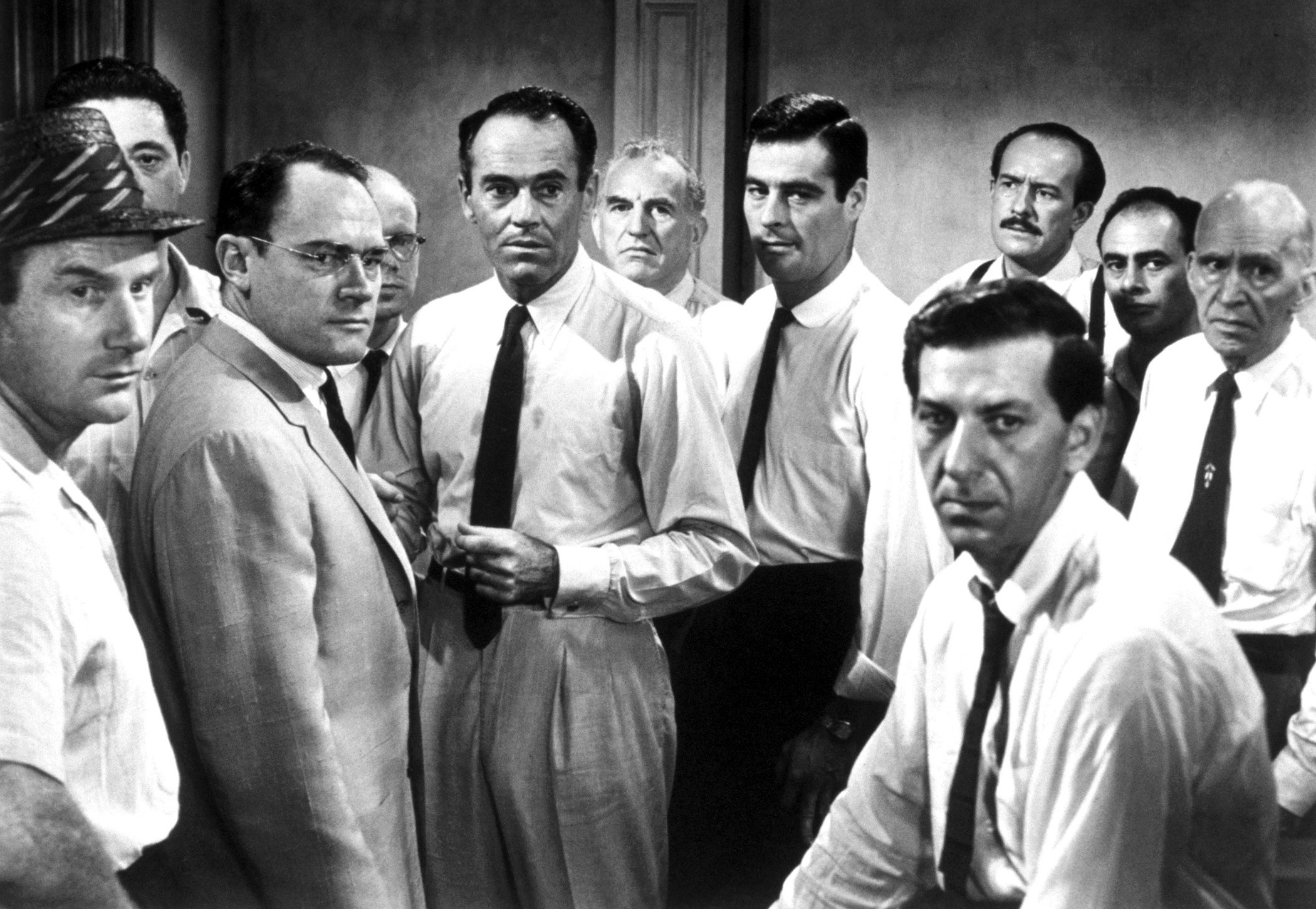
12 Angry Men (Sidney Lumet, 1957) = 5/5

A minimalistic triumph, and a testament to why characterisation and dialogue are the two most important elements of a film. It also serves as an example of perfect casting. Can't believe I'd never seen this before, especially considering I LOVE films shot almost exclusively in one location.

APRIL 13
The Puffy Chair (Jay Duplass, 2005) = 3.5/5

One of those frustrating films that comprises of brilliant individual scenes that don't quite add up to a great film. 'The Puffy Chair' is a good film, and it is worth seeing for its performances and emotional sincerity. I'm just not sure if I'll remember it in six months' time.

APRIL 15
Romper Stomper (Geoffrey Wright, 1992) = 3.5/5

A disturbing exploration of the dark recesses of humanity. It's surprisingly stylish (at times reminiscent of A Clockwork Orange), but it feels a bit one-note in the way it uses violence to propel the plot. It just needed to take its foot off the accelerator more often.

APRIL 16
Lawn Dogs (John Duigan, 1997) = 3/5

Despite strong chemistry between Rockwell and Barton, the film's offbeat vibe feels forced, and its frantic genre-hopping means it often struggles to be accessible. The film's poster features one critic's opinion that this is EDWARD SCISSORHANDS meets David Lynch, so I went into the film expecting that melange. I can definitely notice parallels to the former, but this is far from anything Lynchian.

APRIL 17
Sideways (Alexander Payne, 2004) = 5/5

Clueless about Cabernet? Perplexed by Pinot? Not in-the-know about Merlot? Wine is only the conduit for this film about the innate need for human attachment. The screenplay, by Alexander Payne and Jim Taylor, is one of the finest ever put to film. The characters are painfully real, thanks largely to affecting performances by Paul Giamatti, Thomas Haden Church, Virginia Madsen, and Sandra Oh, whose facial and body gestures say as much as their words. It's my 12th favourite film of all time!

APRIL 19
Requiem for a Dream (Darren Aronofsky, 2000) = 4.5/5

A film about the murky depths of dependence. A chaotic concoction of phantasmagoric images. A dark tunnel with no exit. Ellen Burstyn gives one of the greatest performances in the history of cinema.

APRIL 20
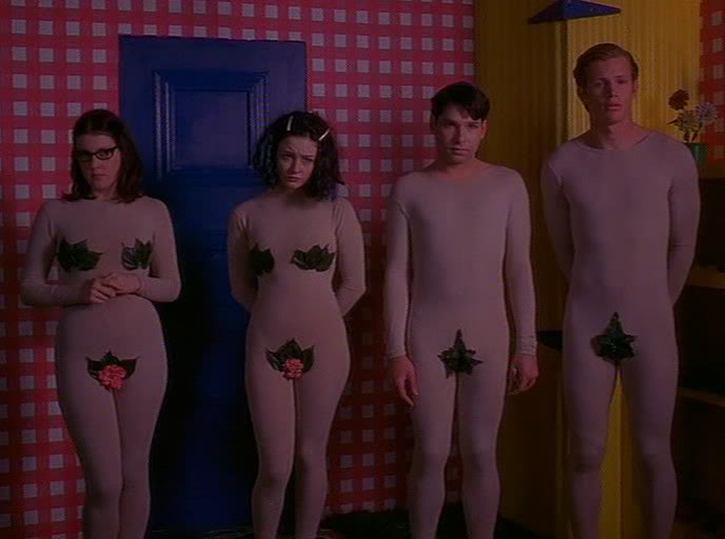
But I'm a Cheerleader (Jamie Babbit, 1999) = 3/5

It picks worthwhile subjects to satirise (heteronormativity, society's fixation with sex, gender roles), but its execution just feels too heavy-handed. Hasn't aged well. The costumes and sets almost blinded me.

APRIL 21
Henry: Portrait of a Serial Killer (John McNaughton, 1986) = 3.5/5

I've seen scarier films, but few films are as downright NASTY as this. This is a hobo's fingernails, mayonnaise left in the sun, maggots feasting on roadkill.

McNaughton does not condemn his depraved protagonist. He is too smart to resort to archetypes. Henry is a man that could live next door to you. Nothing in this film is gratuitous, and McNaughton sustains a constant atmosphere of dread.

APRIL 22
Porky's (Bob Clark, 1982) = 4/5

I'm going to be completely honest here. If you are not a male in your late teens or early 20s, there's a good chance you will not like this film. Few films have dared to be this lowbrow, but as a 21-year-old male (who went to an all-boys high school), something about these free-spirited characters getting into mischief struck a chord with me.

I have never been one to rebel against the rules. Call me a "goody two-shoes" type, if you will. Seeing this group of buddies engage in all sorts of boisterous antics was a form of escapism. Not only is it entertaining. It is very, very funny.

I would not like this film if it were made today. It was a product of its time and place, and it's no wonder it is so influential within the teen sex comedy subgenre. I guess I'm not surprised that I enjoyed Porky's. I'm just surprised I enjoyed it to this degree.

APRIL 23
Lilja 4-Ever (Lukas Moodysson, 2002) = 5/5

A terrifying film made scarier by the knowledge that things are even worse in reality. The suspense is incredible. We know things are going to take a disastrous turn, but it's difficult to predict when that turn will occur. Could seem nihilistic or life-affirming, depending on the angle from which you look at it. All I know is that I will sleep tonight feeling extremely grateful for my bed, my family, and my free will.

APRIL 24
Clue (Jonathan Lynn, 1985) = 3.5/5

Fast-paced with snappy dialogue which complements the film's frenzied chaos. Accessible despite its unusual source material; however, it becomes less enjoyable as it gets more convoluted.

APRIL 26
The Ring (Gore Verbinski, 2002) = 3/5

I am yet to see the original, but this is a very stylish remake. Verbinski piles on layers of atmosphere, and the cinematography is brilliant. The scares are effective, too. While there are a few jump scares, the film doesn't rely on them to send chills down viewers' spines.

Despite these positives, I felt rather distanced from the characters, and didn't empathise with them as much as I would've liked. Also, the ending was too congested with detail which made it virtually unbelievable, even within the realm of a horror film with supernatural elements.

APRIL 28
Pretty Persuasion (Marcos Siega, 2005) = 3/5

One of the darker black comedies I've seen. Occasionally funny (I actually laughed out loud), but the film seems unsure of its satirical targets, and we as an audience feel unsure about when to laugh. It tries so hard to be "edgy", almost as though it lumps together your run-of-the-mill controversial themes and hopes an intelligent point emerges.

Evan Rachel Wood deserves praise, though. She pulls off this conniving, downright bitchy protagonist so assuredly. I also found Danny Comden incredibly funny. He has an impeccable sense of comic timing.

APRIL 30
The Grand Budapest Hotel (Wes Anderson, 2014) = 4.5/5

I have a well-documented love/hate relationship with Wes Anderson. Before today, I had only seen four of his films.Rushmore charmed me, and Moonrise Kingdom was absolutely captivating. On the other hand, I thought The Royal Tenenbaumswas incredibly pretentious, and I found it extremely difficult to become emotionally involved in The Darjeeling Limited.

Going into The Grand Budapest Hotel, I declared that this would be the film to solidify my stance once and for all. I had heard people say this is the most 'Andersonian' Wes Anderson film, so I figured that to dislike this would be to dislike everything the man stands for as a filmmaker.

But you know what? I absolutely loved it! Perhaps the most remarkable aspect of the film is its snappy pacing. It's an incredibly tight film, where each scene feels essential to the one that preceded it. Unlike some other Anderson films where events seem to 'befall' characters, the characters in this film drive the story with great gusto.

In the past, I have criticised Anderson's choices in creating a sense of time and place. One of the reasons The Royal Tenenbaums doesn't work for me is that it feels like the Tenenbaum family exists in their own private universe, extricated from humanity. But they live on planet Earth, which is why it's concerning that I felt so distanced from them.

Wes succeeds in the way he builds a convincing mythology around the goings-on inside the Grand Budapest Hotel while convincing the audience that a world exists outside of it (even if the Republic of Zubrowka is fictional). Even in its most preposterous moments, the events are still believable within the realm of Anderson's universe.

They're believable because the characters are so much easier to relate to than the Anderson caricatures of old. This quirky cineaste deserves praise for embellishing his existing tropes while expanding his scope in storytelling.

The Grand Budapest Hotel is the warmest, most human Wes Anderson picture to date, and after sitting on the fence for so long, I am no longer hesitant to call myself a fan.

In Summary - The Must-See Films (4.5 or 5 Stars)
* Akeelah and the Bee
* The Way, Way Back
* Mulholland Drive
* 12 Angry Men
* Sideways
* Requiem for a Dream
* Lilja 4-Ever
* The Grand Budapest Hotel

Wednesday, April 2, 2014

March 2014 Film Wrap-Up

MARCH 2
In the House (François Ozon, 2012) = 4/5

When a student recounts in impeccable detail what he did on the weekend, his French teacher becomes deeply invested in his every move. This is a thoroughly absorbing film with a deliciously dark sense of humour. It derails towards the end by becoming excessively self-aware.

MARCH 6
The Darjeeling Limited (Wes Anderson, 2007) = 2.5/5

It moves from one contrived scene to the next. It's not funny enough to be a comedy, nor is it earnest enough to be a drama. Of course, it looks spectacular...but it's Wes Anderson so that's a given.

I've decided that Anderson is officially the director who frustrates me the most. He is an intelligent man who understands cinema. He frames his shots in visually exciting ways.

However, when it comes to the stories he tells, I feel that he makes films for himself more than anyone else. Inviting empathy from audiences isn't his forte. When I watched The Royal Tenenbaums, I could not stop thinking, "Why should I care?" The same question plagued me throughout The Darjeeling Limited. Here, the three brothers are on a journey to see their mother. This matters to THEM, but as a viewer, I didn't see their mother until very late in the film. How am I supposed to care about their journey if I don't care for the person they're going to see?

Essentially, the events of this film are ephemeral. They exist merely to move the plot along. Nothing from this film is going to stay with me. Even a major scene of tragedy did not shake me because its inclusion felt so forced.

As for the characters, they became obnoxious as the film progressed, and they felt like an amalgamation rather than individuals with their own agency.

Oh Wes, how I wish you'd focused less on aesthetics and more on a story I care about...something I could experience rather than watch.

MARCH 7
United 93 (Paul Greengrass, 2006) = 4.5/5

This is scarier than any horror film I have ever seen. It is written and directed with tremendous respect for its subjects. By casting unknown actors as the passengers and crew, the tragedy feels a lot closer to home. Greengrass does not paint the terrorists as cartoonishly evil, which indicates his immense trust in the audience's maturity. The film is impeccably edited and the use of handheld cameras makes the action feel very immediate. It is an important film that will stay with me forever.

MARCH 10
Prince Avalanche (David Gordon Green, 2013) = 3.5/5

The only other David Gordon Green films I've seen are All the Real Girls and Snow Angels. I thoroughly enjoyed both, and Prince Avalanche adds yet another success to his filmography. Its earthy colour palette hit the spot like a mug of warm cocoa. It is a poignant film about isolation and human kindness.

MARCH 11
The Night of the Hunter (Charles Laughton, 1955) = 3/5

Ahead of its time with a menacing performance from Mitchum. Alas, it just isn't suspenseful enough. I can understand how a 1955 audience would have been shaken by it, but I was very underwhelmed and even bored.

MARCH 12
The Vicious Kind (Lee Toland Krieger, 2009) = 4/5

This gripping drama is incredibly intense at times, but it's also imbued with a wry sense of humour. Adam Scott gives a powerhouse performance—a far cry from the nerdy Ben Wyatt of Parks and Recreation. Despite its dark themes, I believe this film will have wide appeal because it grapples with the tribulations we all deal with in our personal lives. We are creatures of regret. We do things that hurt us for inexplicable reasons, and we all have skeletons dangling in our closets. All of the characters here are in a constant state of flux, which makes for compelling viewing. I was admittedly surprised by how good it was, and I think it's fair to say that Lee Toland Krieger is one of the most promising directors of this generation.

MARCH 14
The White Ribbon (Michael Haneke, 2009) = 4/5

It occasionally meanders and the ambiguous ending is a little unsatisfying, but the film's impeccable cinematography creates a vivid sense of time and place. The dialogue is also rather compelling, drawing us into a tangled web of evil.

MARCH 15
When Harry Met Sally... (Rob Reiner, 1989) = 4/5

"Men and women can't be friends because the sex part always gets in the way." Thus declares Harry Burns (Billy Crystal) to his acquaintance Sally Albright early on in the film. It's a statement everyone has given some thought to at some stage in their life, and the film dissects it very thoughtfully. This is a seminal romcom that is funny, perceptive, and subtly touching. Even at its most clichéd points, it doesn't lose its charm.

MARCH 16
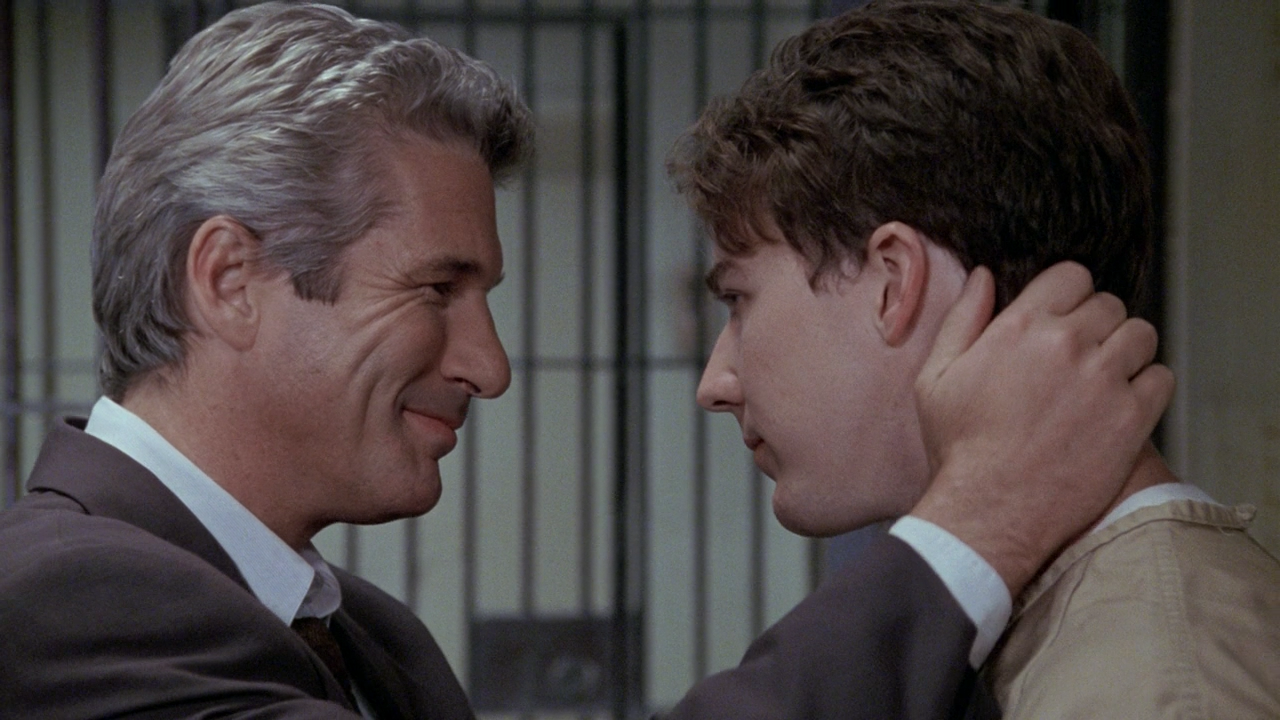
Primal Fear (Gregory Hoblit, 1996) = 3.5/5

It pulled the rug out from under my feet a few times, and Edward Norton gives one hell of a debut performance. Unfortunately, its story is let down by nondescript direction. It didn't always hold my attention because it felt as though director Hoblit (who directed crime fiction TV shows before this) was going through the motions behind the camera.

MARCH 17
One Flew Over the Cuckoo's Nest (Miloš Forman, 1975) = 4/5

I had the privilege of watching this on the big screen last month. I've rated it half-a-star higher than I did after my first viewing (which I was too young to appreciate, anyway).

It's still not among the greatest films I have ever seen, and my main problem is that I don't think it required all of its 133 minutes. Nonetheless, it is a powerful piece of cinema which makes us genuinely care about the fates of its characters. Its main strength is its screenplay. The film can go from funny to affecting in a matter of seconds in a way that many screenwriters would envy. Not everyone would love this film, but I imagine very few would hate it. It is timeless.

MARCH 22
Wadjda (Haifaa al-Mansour, 2012) = 4/5

It's a sweet, quiet film that excels through simple direction. A triumph for Saudi Arabia that should not be ignored, considering it's the first ever feature film shot entirely in that country, and the first feature film made by a female Saudi director.

MARCH 27
Clerks. (Kevin Smith, 1994) = 4/5

The mundane becomes so watchable. We hang on every word spoken by these characters whose existential crises are very relatable. With a budget of only $27,575, it's a testament to how you don't need extravagant production values to connect with audiences or to hold a viewer's interest. 

MARCH 31
Thank You for Smoking (Jason Reitman, 2005) = 4/5

A sharp, biting satire featuring a smarmy though likeable protagonist (Aaron Eckhart). Structurally flawed, but still very worthwhile.

In Summary - The Must-See Films (4.5 or 5 Stars)
* United 93